



29/07/2026
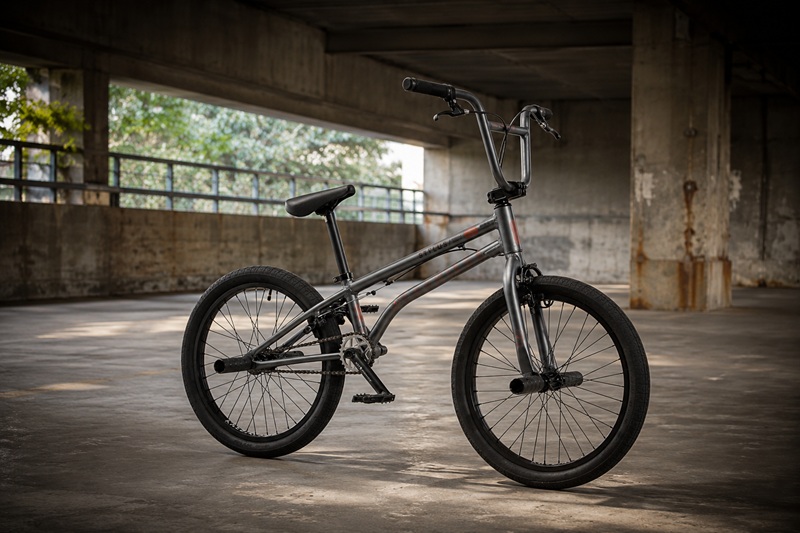
KHE STYLUS V2: Our Flatland BMX
With the KHE STYLUS V2, we’re returning to our brand’s roots. KHE grew up with flatland and has been developing BMX bikes and components for more than 35 years for riders who demand the highest standards of technique, control, and performance.
The STYLUS V2 is one of the standout bikes in our 2025 BMX series and our professional complete bike for the most technical discipline in BMX. Weighing just 8.9 kg in the brakeless configuration—including four pegs—with specially developed flatland geometry and high-quality components, it’s ready for demanding sessions and contests right out of the box.
Back to the Roots: KHE and Flatland
Flatland has been an integral part of KHE’s history since the very beginning. Early on, we focused on BMX bikes and components specifically designed for controlled spins, balance tricks, and complex sequences of movements.
It was never just about making an existing BMX bike a little lighter. Flatland places completely different demands on the frame, fork, drivetrain, wheels, and brake system than Street, Park, or Dirt. The bike must be extremely agile, offer precise control, and provide the rider with as much freedom of movement as possible.
With the STYLUS V2, we’re reviving this tradition. The bike combines our many years of experience with modern materials, compact geometry, and components specifically tailored to ambitious flatland riders and pros.
What is Flatland BMX?
Flatland is a distinct BMX discipline in which tricks are performed on as level a surface as possible. Unlike street, park, or dirt riding, no ramps, rails, or jumps are required.
The rider uses the BMX itself as the focal point of the movement. Many tricks are created by shifting body weight, balancing on the pegs, controlled spins, and fluid transitions between different positions.
Flatland is therefore often described as a mix of BMX, acrobatics, and breakdancing. Instead of big jumps, the focus is on balance, body control, creativity, and technical precision.
A flatland line usually consists of several tricks linked together. Experienced riders try to combine the individual elements as smoothly as possible without putting their feet down.
Well-Known Flatland Tricks
Flatland offers an enormous number of tricks and variations. Many sequences can be combined with one another, performed in reverse, or enhanced with additional spins.
Some of the well-known basics and classic flatland tricks include:
- Trackstand
- Steamroller
- Fork Glide
- Hang Five and Hang Ten
- Decade
- Boomerang
- Whiplash
- Fire Hydrant
- Cyclone
- Time Machine
- Hitchhiker
- Backyard and Frontyard
- McCircle
Some of these tricks are suitable for beginners, while others require a great deal of experience. In flatland in particular, every rider develops their own style over time and combines familiar basic movements into unique combinations.
Why Flatland Is a Unique BMX Discipline
In flatland, even the smallest movements matter. Even a slight change in body position can determine whether the bike continues rolling in a controlled manner or whether balance is lost.
As a result, flatland not only trains balance but also coordination, concentration, and body awareness. Many tricks must be repeated over a long period of time before they can be performed safely.
Compared to other BMX disciplines, flatland is less dependent on specific terrain. A smooth, dry, and sufficiently large area is sufficient for training. However, it is important that the area be free of traffic, obstacles, dirt, and major unevenness.
The KHE STYLUS V2: Designed Specifically for Flatland
The STYLUS V2 is no ordinary freestyle BMX with a few flatland components. The frame, fork, geometry, and components have been specifically tailored to the demands of this discipline.
The bike combines a very low weight with a short and responsive frame. This makes it easy to lift, turn, and control on the front or rear wheel.
- Weighs just 8.9 kg in the brakeless version, including four pegs
- 6061-T6 aluminum frame
- Aluminum fork with CrMo steerer tube
- 18.9-inch top tube
- 324 mm (12.75-inch) chainstays
- 15 mm fork offset
- 152 mm CrMo crankarms
- KHE GREYHOUND Freecoaster hub
- Patented KHE AFFIX 360-degree rotor
- Four CNC-machined aluminum pegs
- Removable brakes, brake mounts, and cable mounts
Why Lightweight Is Important in Flatland
In flatland, the BMX is repeatedly lifted, spun, or balanced on one wheel. A low weight can make these movements easier and ensure that the bike responds more quickly to the rider’s inputs.
The STYLUS V2 weighs only 8.9 kg in the brakeless configuration, including four pegs. With a rotor, front and rear brakes, cables, and pegs, the weight is 9.9 kg.
However, it’s not just the number on the scale that matters. The weight distribution must also be right. A flatland BMX should lift in a controlled manner and feel as balanced as possible during rotational movements.
The aluminum frame, handlebars, and fork tubes contribute significantly to the STYLUS V2’s weight reduction. The fork steerer tube, which is subject to particularly high stress, is made of CrMo steel.
Aluminum frame and specially developed flatland fork
The frame is made of high-quality 6061-T6 aluminum. This material enables a lightweight yet stable construction.
The fork tubes are also made of 6061 aluminum. The 1-1/8-inch steerer tube is made of CrMo steel. This allows us to combine low weight with stability in an area subject to particularly high stress.
The fork has a trail of only 15 mm. A short fork offset ensures very direct steering response and facilitates tricks where the rider is positioned over the front wheel.
The fork’s 10-mm dropouts have a wall thickness of 7 mm. The frame features sturdy 14-mm dropouts.
The Special Flatland Geometry
The geometry is one of the biggest differences between a flatland BMX and other freestyle BMX bikes.
The STYLUS V2 features a short top tube measuring 18.9 inches or 480 mm. This keeps the bike compact and gives the rider plenty of freedom of movement.
The chainstays are only 324 mm or 12.75 inches long. A short rear triangle makes the bike particularly agile and makes it easier to lift the front wheel as well as to switch quickly between different positions.
The 75-degree head angle ensures direct handling, while the 71.5-degree seat angle supports the compact flatland setup.
The bike is designed for riders with a height of approximately 145 to 190 cm. The ideal size also depends on body type, riding style, and personal preferences. The maximum allowable body weight is 120 kg.
Why Flatland BMX Bikes Are Shorter and More Compact
With street or park BMX bikes, the focus is on stability during jumps, control at high speeds, and safety during landings.
A flatland BMX, on the other hand, is primarily ridden in tight spaces. The rider must be able to switch quickly between the front and rear wheels and move as freely as possible around the bike.
That’s why flatland bikes typically have a shorter top tube, a short rear triangle, a short fork offset, short cranks, four pegs, narrower tires, and often a rotor and a freecoaster.
These features make the bike particularly agile. However, this geometry is less suited for high jumps or fast dirt tracks.
The patented KHE AFFIX rotor
In flatland riding, the handlebars are often rotated multiple times. A conventional brake cable would wrap around the steerer tube and restrict freedom of movement.
That’s why the STYLUS V2 is equipped with our patented KHE AFFIX Rotor . This system allows the handlebars to rotate 360 degrees and beyond without the brake cables getting tangled.
At the same time, both the front and rear brakes remain fully functional. This allows the system to combine maximum freedom of movement with the ability to use the brakes strategically during flatland tricks.
Why Two Brakes Make Sense in Flatland
While many street riders ride completely brakeless, flatland riders often use both front and rear brakes.
The brakes aren’t just for stopping. They can be actively incorporated into tricks. By locking a wheel, you can control certain positions, initiate spins, or stabilize movement sequences.
The STYLUS V2 is equipped with a KHE RADIUS aluminum U-brake on both the front and rear. The aluminum brake levers feature adjustment screws that allow you to fine-tune the braking system.
Brakeless Ready for an especially clean setup
The STYLUS V2 was designed so that it can be ridden with either a full brake system or brakeless.
The brakes, brake mounts, and cable mounts can be unscrewed. This ensures no unnecessary components remain on the frame, giving the bike a particularly clean look.
Which setup is better suited depends on your personal riding style. Brakes can be especially helpful for beginners because they provide additional control. Some experienced riders deliberately opt for a stripped-down brakeless setup.
The KHE GREYHOUND Freecoaster Hub
A Freecoaster hub is particularly important for many flatland riders. It allows you to coast backward without the crankarms rotating.
This makes fakies, backward combinations, and many technical transitions easier. The rider can maintain their foot position and doesn’t have to constantly compensate for the pedal movement.
The STYLUS V2 features a KHE GREYHOUND Freecoaster hub with a 9-tooth driver and sealed industrial bearings. The rear hub has a sturdy 14-mm male axle and is designed for 36 spokes.
Short crank arms for greater freedom of movement
The STYLUS V2 is equipped with a three-piece CrMo hollow crankset and 152 mm short crank arms.
Short cranks create more clearance between the front wheel, footpegs, and the ground, reducing the risk of bumping into them with your feet or pedals during tight maneuvers. They also allow you to position the pedals more quickly.
The 25-tooth aluminum chainring keeps the drivetrain compact and lightweight.
Four aluminum pegs for maximum trick variety
Pegs are among the most important contact points on a flatland BMX. Many tricks are performed on the front or rear pegs.
That’s why the STYLUS V2 comes equipped with two pairs of pegs right out of the box. The four pegs are made of CNC-machined aluminum and feature a knurled surface.
The knurling improves shoe grip and helps maintain a secure position during balance tricks and spins. The front pegs are designed for the 10-mm axle, and the rear pegs for the 14-mm axle.
Flatland Tires: Control Over Maximum Width
The STYLUS V2 is equipped with KHE ACME tires in the size 20 × 1.95 inches.
Compared to many modern street BMX tires, flatland tires are often slightly narrower. This can make the bike feel lighter and respond more directly to steering and balancing movements.
Tire pressure should be checked regularly and adjusted within the limits specified on the tire. The appropriate setting depends on the surface, rider weight, and personal preference.
Differences Between Flatland, Street, Park, and Dirt
Flatland BMX
A flatland BMX is compact, lightweight, and extremely maneuverable. It usually has four pegs, short cranks, a short rear triangle, a short fork offset, and often a freecoaster and a rotor.
Street BMX
Street BMX bikes are designed for grinds, stairs, rails, walls, and hard landings. They usually have wider tires, sturdy CrMo frames, and a longer, more stable geometry.
Park BMX
Park BMX bikes combine light weight with stability for ramps, jumps, and quick changes of direction. The geometry is often slightly longer and smoother than that of a flatland BMX.
Dirt BMX
Dirt BMX bikes are designed for high speeds and big jumps. They require stable handling, sufficient tire tread, and a geometry that ensures safety during takeoffs and landings.
A flatland BMX is specifically designed for technical tricks on flat ground and is not intended for big jumps or hard street landings.
Who is flatland BMX for?
Flatland BMX is for anyone who enjoys technical challenges, balance, and creative movements.
- BMX beginners who want to start by practicing without ramps
- Riders who particularly enjoy working on technique and control
- Creative riders who want to develop their own trick combinations
- Teens and adults
- Riders looking for a BMX discipline that requires relatively little space
- Experienced BMX riders who want to improve their balance
Flatland requires patience. Progress often comes in small steps. That’s exactly what makes it so appealing to many riders.
What’s the best way to get started with flatland?
To get started, you should first find a large, smooth, traffic-free area. The surface should be dry, clean, and as level as possible.
In the beginning, it’s best not to try complicated combinations right away. Basic control and a confident feel for the bike are more important.
Good exercises to start with are:
- riding slowly in tight circles,
- track stands,
- controlled lifting of the front and rear wheels,
- getting on and off the pegs safely,
- balance exercises with one foot on the peg,
- first rolling movements,
- controlled handlebar turns, and
- simple transitions between the pedal and the peg.
Each exercise should be practiced on both sides. This helps the body develop more evenly and allows for more flexible building of future combinations.
What should you keep in mind when doing flatland?
Before each session, check your bike and the training area.
- Tightly secured axle nuts and pegs
- Handlebars and stem properly secured
- Brakes working properly
- Proper tire pressure
- Spokes tensioned sufficiently
- Smooth-running bearings
- Clean and dry training area
- Sufficient distance from people, vehicles, and obstacles
Crashes are possible even in flatland riding. A BMX helmet should therefore be part of your basic gear. Depending on your skill level, knee, elbow, and shin pads may also be advisable.
Our verdict on the KHE STYLUS V2
The KHE STYLUS V2 is much more than just a new BMX model to us. It combines our flatland roots with modern construction and components that are consistently designed for technical control and low weight.
This makes it the right choice for ambitious riders and pros looking for a lightweight, agile, and highly customizable flatland complete bike for training, creative lines, and contests.


